

Driving Productivity Growth through Organizational Transformation: Leveraging Engagement and Management Surveys
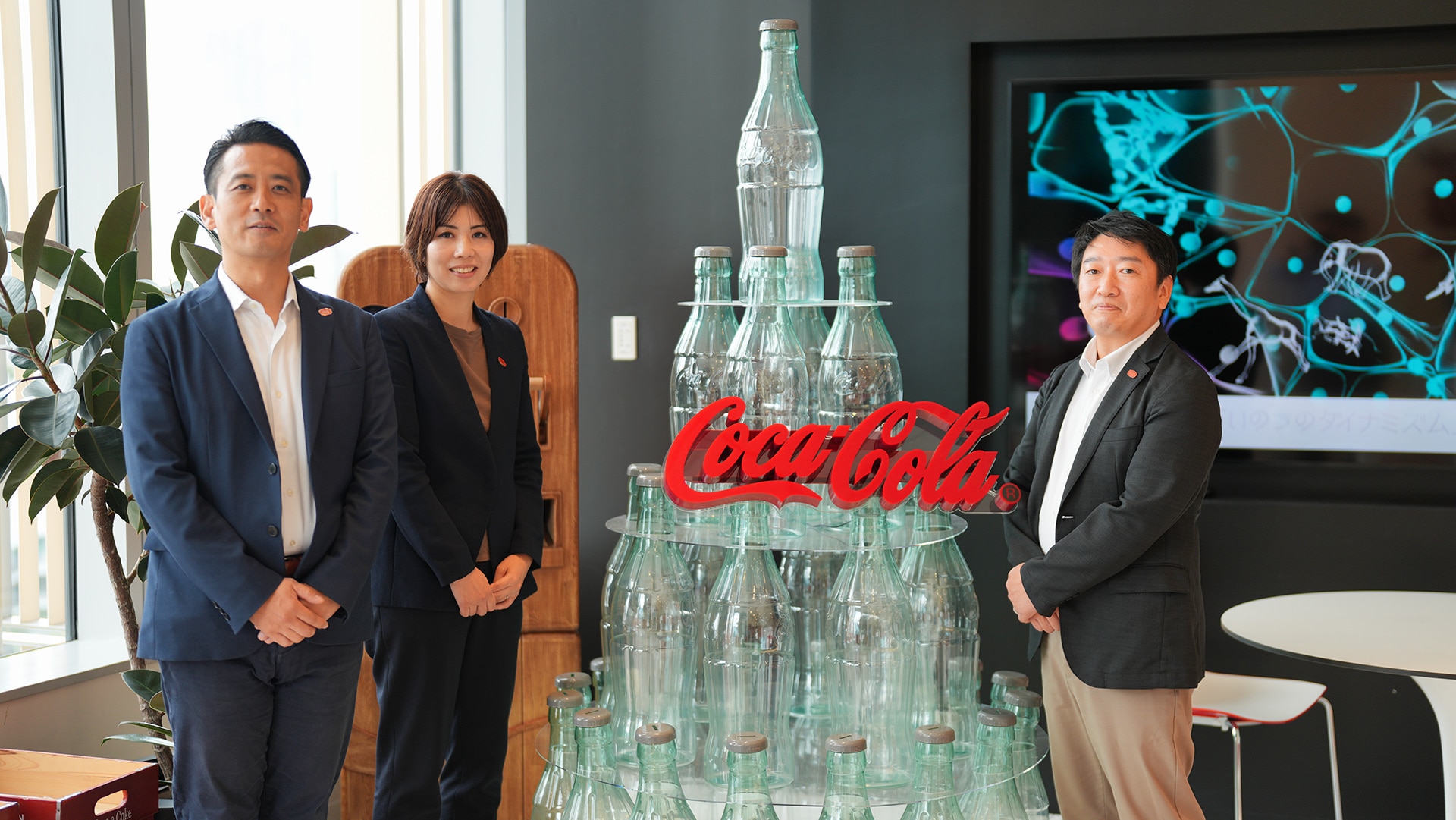
Coca-Cola Bottlers Japan Inc. SCM Division
Section Manager, KAIZEN Promotion & Capability Development Section, OE/SC Capability Department: Mr. Takashi Inoue
Team Leader, KAIZEN Promotion & Capability Development Section, OE/SC Capability Department: Ms. Eriko Ishikawa
| Business | Manufacture, processing, and sale of soft drinks and alcoholic beverages |
|---|---|
| Type of industry | Food & Beverage |
| Number of employees | 2001 employees~ |
|
Scale of utilization |
2001 employees~ |
Expectation
-
Improving productivity is a strategic priority for the SCM Division. Achieving this requires an environment where improvement activities are driven from the bottom up, not just the top down. Consequently, the project aimed to build this culture by enhancing employee fulfillment and motivating them toward self-growth.
-
With the management merger as a catalyst, the goal was to implement a new set of indicators to drive collective improvement, all while honoring the heritage and values of each legacy organization.
Outcomes
-
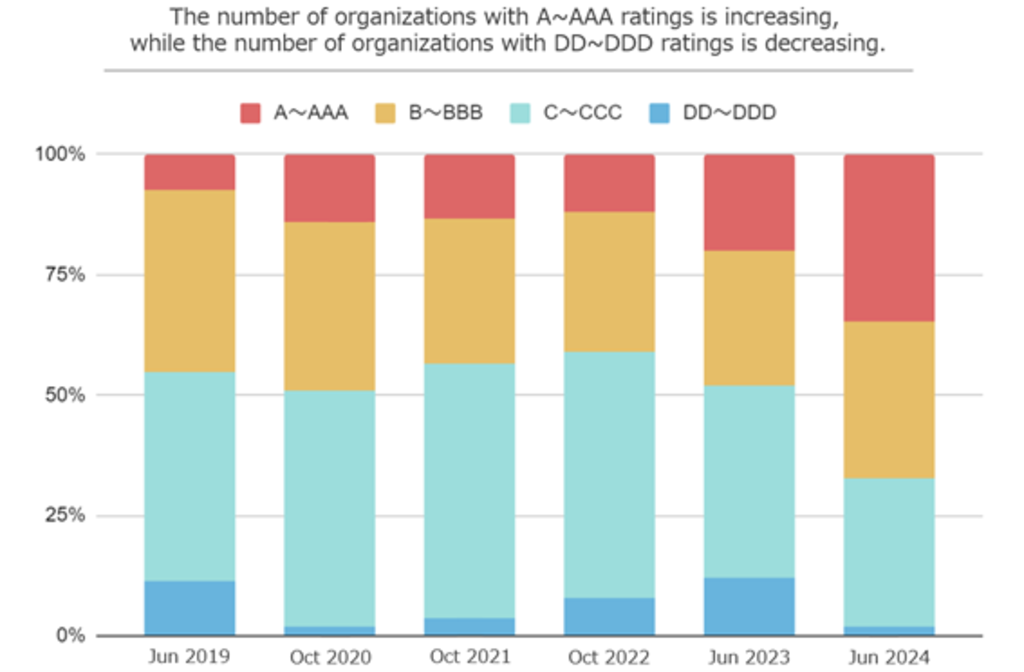
Improvement activities have gained momentum across all workplaces, with initiatives to boost engagement now being driven spontaneously. As a result, these efforts have led to a direct improvement in business performance.
-
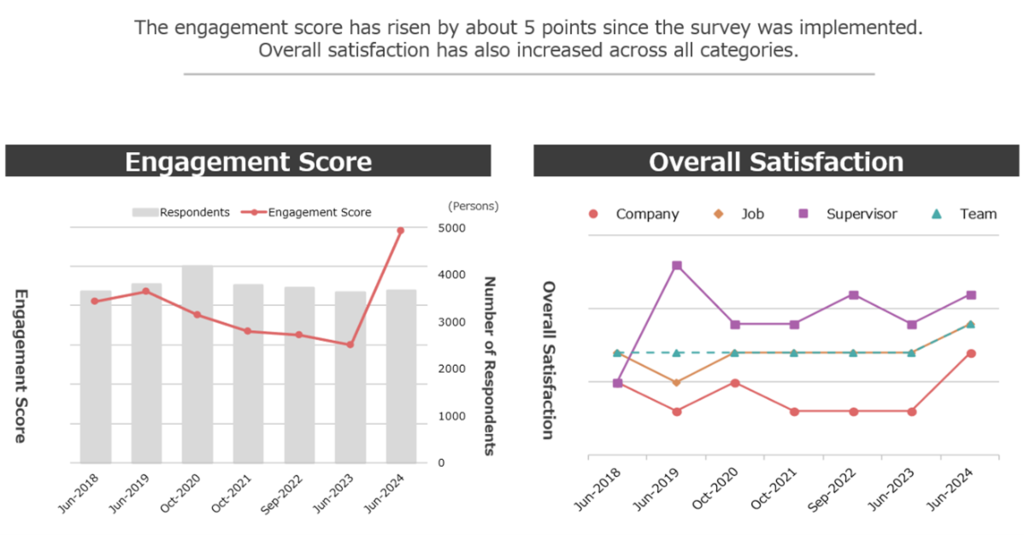
Since introducing the survey, the organization has seen an increase of about 5 points in its overall engagement score.
-
The survey quantified the organizational traits we had previously only sensed intuitively. Seeing these strengths and weaknesses through concrete numbers has significantly boosted the collective drive to pursue real change.
-
Selected model departments also introduced 360-degree surveys for managers and high-potential leaders. By providing an objective look at their leadership approaches, these surveys have helped bridge the gap between managers and their teams, resulting in improved workplace relationships.
-
The survey revealed that strong relationships between managers and their teams are a widespread asset, serving as a fundamental pillar of our organizational identity.
For more details, please contact us.
A bottling company responsible for building the Coca-Cola supply chain.
Business and Department Overview
Mr. Kamata: The Coca-Cola system operates on a franchise model. Our company is one of the "bottlers" that procures concentrate from Coca-Cola (Japan) Co., Ltd. to handle the manufacturing, logistics, sales, collection, and recycling of products.
Within this framework, the SCM Division is responsible for the strategic planning and execution of the entire supply chain for Coca-Cola Bottlers Japan. We are building an efficient, waste-free supply chain system to deliver safe, secure, and high-quality products to our customers at a low cost. Additionally, the SCM Division plays a vital role in fostering talent development through continuous improvement (Kaizen) initiatives.
Using engagement as a new metric to unify the organization during the period of PMI.
Background of Implementing Link and Motivation’s Services
Mr. Kamata: Under our core mission of developing talent capable of driving transformation and delivering consistent value, the SCM Division promotes "Operational Excellence (OE)" as a continuous improvement initiative. OE serves as a capability development framework aimed at sustainable growth as an entire group; it leverages engagement as a foundation to cultivate performance leaders and create new value through improvement activities.
In advancing continuous improvement activities, a bottom-up approach is just as essential as a top-down one. We believe that new value is created where these two approaches overlap. In that sense, it is necessary to enhance employees’ sense of fulfillment, job satisfaction, and desire for growth at each workplace, and we recognized this as a key challenge.
We had been paying attention to the concept of engagement for some time, but the catalyst for introducing Link & Motivation’s Engagement Survey (Motivation Cloud) was the 2018 business integration. Coca-Cola East Japan Co., Ltd. and Coca-Cola West Co., Ltd. merged to form a single entity responsible for approximately 90% of Japan’s sales volume. Taking this merger as an opportunity, we wanted to establish new metrics that we could work on together while respecting the cultures each company had cultivated. Engagement was the perfect metric for this.
However, it is true that there were some internal skepticism within the company regarding the introduction of the engagement survey. At the time, the HR department was already conducting several surveys, and there were many concerns about "survey fatigue". However, based on my past experience, I believed that “the more controversial something is, the greater its potential to spark a movement.” Projects with unanimous support rarely leave a lasting impact. Controversial topics capture everyone’s attention and serve as a catalyst for people to think critically about how they can apply the findings to their own work and the organization.
With this in mind, we decided to implement the survey, and even after its launch, we continued to communicate the importance and significance of the initiative in various meetings.

The true appeal lay in their ability to provide tailored proposals and insights that were specifically aligned with our company’s unique needs.
Why We Chose Link and Motivation as Our Partner
Mr. Kamata: While we already had a pre-existing relationship with Link and Motivation, they were the partner that perfectly aligned with the vision I had at the time. What truly appealed to me was their deep understanding of our unique situation and needs, and their ability to provide highly customized solutions tailored to us. They go beyond simply conducting surveys and reporting results; they offer a one-stop solution that includes expertise in talent development and the hands-on support necessary for actual organizational transformation. The deciding factor was my confidence that they could provide the kind of insights and strategic advice I hadn't yet considered myself.
Our collaboration was solidified following a successful Leadership Training Program they conducted for us. During that session, I realized that leadership and employee engagement are highly interrelated. I felt that with Link & Motivation, we could work together effectively on both skill development and improving employee engagement, which led to our decision to partner with them.
The engagement survey is like an annual health check-up for the organization.
Why We Chose Link and Motivation as Our Partner
Mr. Kamata: While we already had a pre-existing relationship with Link and Motivation, they were the partner that perfectly aligned with the vision I had at the time. What truly appealed to me was their deep understanding of our unique situation and needs, and their ability to provide highly customized solutions tailored to us. They go beyond simply conducting surveys and reporting results; they offer a one-stop solution that includes expertise in talent development and the hands-on support necessary for actual organizational transformation. The deciding factor was my confidence that they could provide the kind of insights and strategic advice I hadn't yet considered myself.
Our collaboration was solidified following a successful Leadership Training Program they conducted for us. During that session, I realized that leadership and employee engagement are highly interrelated. I felt that with Link & Motivation, we could work together effectively on both skill development and improving employee engagement, which led to our decision to partner with them.
On Engagement Improvement Initiatives
Mr. Inoue: As a starting point for our engagement improvement initiatives, we conduct the Motivation Cloud Engagement Survey every June. As soon as the results are finalized, we share them with the managers. We also provide an overview of the results to the employees who responded to the survey and advise them to receive detailed feedback from their supervisors. Following that, in September, we hold a workshop for Group Division Managers and Department Managers to discuss action plans based on the survey results. These plans are then put into motion as part of our standard operational cycle.
Over the past few years, we’ve seen an uptick in inquiries asking how to interpret the results or the logic behind the scoring. To address this, we began hosting internal webinars last year to explain how to read the survey data and outline the next steps.
Since the survey is conducted annually, many managers seem to get a bit nervous when "that time of year" rolls around again. After all, the scores are clearly presented, and cross-department comparisons are possible, so I think many managers consider it an important indicator.

Mr. Kamata: I often tell the team, "It’s vital to treat this as an organizational health check so we can pinpoint exactly where our challenges lie." That said, I certainly understand why a health check makes people nervous. It’s only natural, considering it represents the culmination of an entire year’s efforts.
Survey scores resonate with the reality on the ground, providing a sense of credibility that effectively fuels the drive for improvement
The Impact and Benefits of the Engagement Survey
Mr. Kamata: What we are most proud of in the SCM Division is our high score in "Manager-Team Relationships." We have long believed that these relationships are the bedrock of both improvement activities and business performance. Seeing this strength reflected in the data and being able to say, "Our manager-team relationships are a core strength," as a characteristic of our organization is incredibly rewarding.
Mr. Inoue: All of us in management, myself included, find the survey scores convincing. We feel that causal relationships—such as “the score went up because we did X” or “the score went down because Y was insufficient”—are clearly reflected in the results. I believe this persuasive explanation of “this is why we have this score” is what drives our motivation to improve.
Mr. Kamata: When I ask team leaders about the survey scores, “Is there a gap between your own qualitative impressions and the numerical results?” everyone says, “There is no gap.” Whether the scores are high or low, they seem to have a sense of acceptance, thinking, “Ah, that makes sense.” If there were a gap here, it would raise skepticism—people might ask, “What is happening with this survey?” But since the things we already vaguely sense in our daily work are clearly reflected in the numbers, it actually boosts the momentum for improvement.
What surprises me is that as soon as the survey results are uploaded, everyone checks them all at once. They start analyzing the data themselves or check the results of other departments, asking things like, “How did that department do?” Lately, I’ve noticed that surrounding managers are taking an interest in the performance of newly appointed managers, asking, “What’s the state of their teams?” By looking at the survey numbers, they can tell whether a manager is struggling or successfully leading their team. I believe this also serves as an opportunity for colleagues to offer support to newly appointed managers who aren’t doing well.

Building Curiosity Through Gradual Information Transparency
Key Factors in Successfully Implementing Engagement Improvement Initiatives Throughout the Company
Mr. Kamata: We were very intentional about how we rolled out the survey data. Rather than opening everything up all at once, we expanded the scope of information disclosure in stages. In the first year, managers could only see their own team's data, then this extended to the division-level the following year, and the scope broadened further with each year after that. This gradual shift gave everyone time to really digest what "engagement" meant. It moved the needle from simple curiosity to deep analysis. As a result, I believe people became able to focus on improving their own organizations while developing a healthy analytical curiosity about other departments and how.
Mr. Inoue: One concern we had at the outset was that managers might focus solely on comparing numbers without understanding the context. To prevent this, we restricted information at the start and only expanded access as organizational data literacy improved. Since around the fourth year, we have reached a point where we could provide managers with access to the results for the entire organization.

Creating a Model Case for a “Highly Engaged Manufacturing Organization”
The "Team Performance Maximization Program"
Mr. Inoue: Every year, based on the results of the engagement survey, we not only implement improvement activities on the front lines but also plan and execute initiatives led by the SCM Division. This year, we have decided to implement the “Team Performance Maximization Program.” The Team Performance Maximization Program aims to create a “model case for manufacturing organizations” capable of achieving high performance, safety, and engagement.
Most of our previous initiatives focused solely on managers. However, there are limits to driving improvement through managers alone, and the Division Head conveyed the message that “managers are not the only ones responsible for workplace improvement; non-managerial staff must also take ownership and get involved.” We hoped that managers and non-managerial staff could share a common vision of “improving our workplace together” as colleagues working side by side. While we were engaged in our consultation with Link & Motivation, we also launched the Team Performance Maximization Program.
I believe there were quite a few managers who were struggling because they felt they had to “figure it out on their own” simply because they were in a managerial role. However, there is no need to shoulder everything alone. I believe involving non-managerial staff in this program shifted that dynamic and was a key factor in its success.
When launching the program, we first selected two plants as pilot sites that could serve as model cases, after consulting with the Heads of the Plant Divisions. Participants in the program include all managers at those plants—including line managers—as well as non-managerial staff members who will work alongside managers to improve engagement.
Ms. Ishikawa: The program consists of training sessions for managers, training for non-managerial staff, and joint sessions for both groups. We begin by helping managers understand their roles and develop the right mindset. After re-examining the company’s vision and organizational challenges, we discuss what each group can do to achieve the vision and solve these challenges.

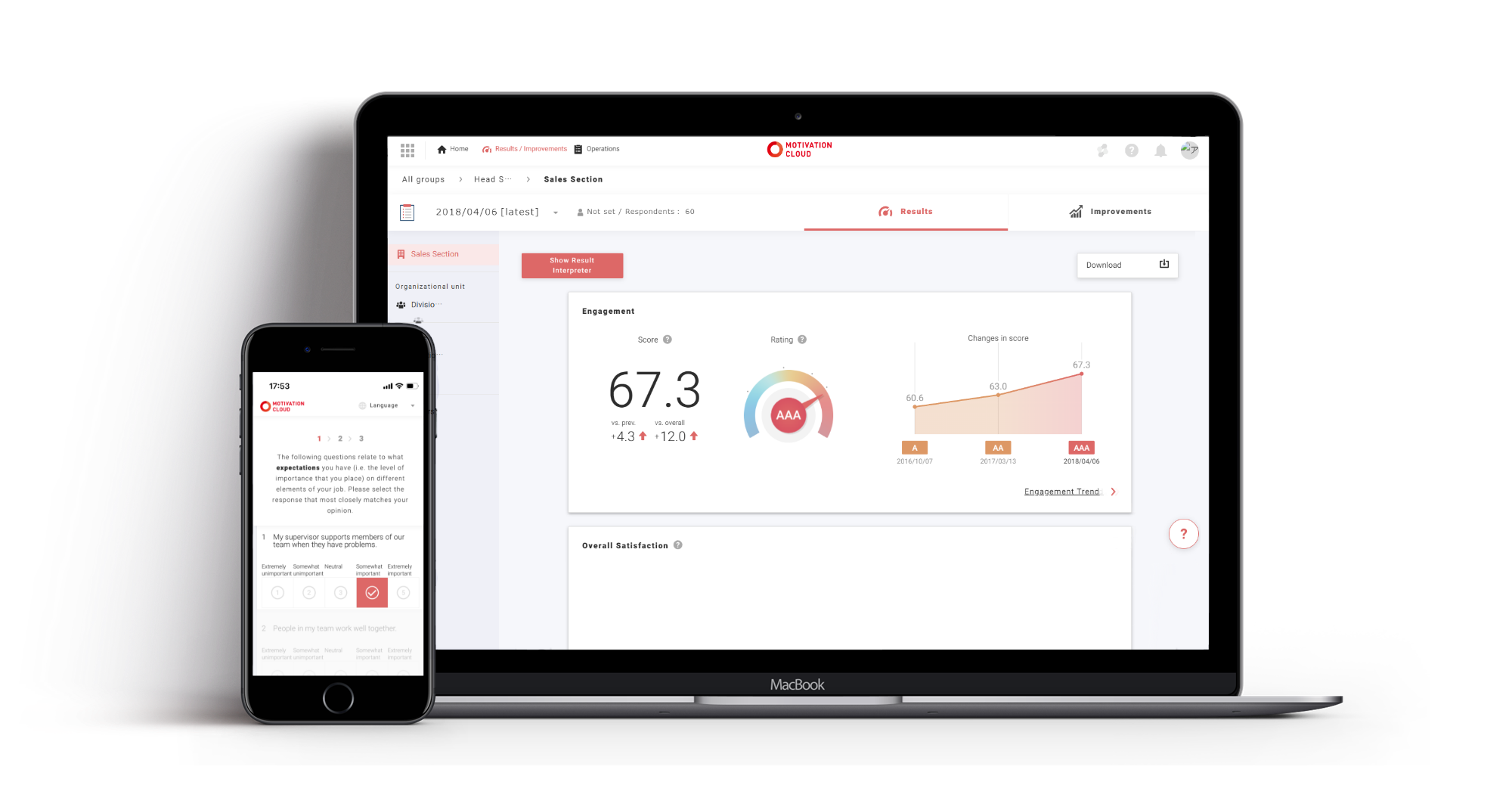
Mr. Inoue: For initiatives targeting managers, we utilize Link & Motivation’s Motivation Cloud Role Development (formerly Stretch Cloud*). We use 360-degree surveys to quantitatively assess management skills, and based on those results, we provide skill development focused on “what it means to be a manager.”
*For details on Motivation Cloud Role Development (formerly Stretch Cloud), click here
For initiatives targeting general employees, we help them understand the necessity of demonstrating leadership and followership as next-generation leaders. We also use 360-degree surveys to help them assess their current standing and implement initiatives to bridge the gap between their current state and their desired state.
Improved Engagement and Enhanced Workplace Unity
Results and the Value of Partnering with Link and Motivation
Ms. Ishikawa: Although the Team Performance Maximization Program is still ongoing, I feel a sense of unity is beginning to emerge in the workplace. Since participants are taking what they’ve learned in the training back to their workplaces and sharing it with other members, I have a strong sense that if things continue to move in this positive direction, it will lead to the development of a strong following.
Mr. Inoue: Motivation Cloud Role Development clearly reveals the expectations others have of management styles. Being able to view management styles objectively is a major benefit, and I find it highly effective that it uncovers individual challenges for managers that aren’t visible through engagement surveys alone.
Mr. Kamata: Since we launched our engagement improvement initiatives, our engagement score has risen by about 5 points. As I mentioned earlier, the relationship between managers and subordinates scores very highly. This is a core part of our company’s identity, so we intend to make it even stronger going forward. We aim to develop talent capable of driving transformation while consistently creating value, and since engagement is the foundation of that growth, we are committed to its long-term improvement.

Dedicated to the continuous pursuit of a workplace where smiles never fade.
Future Goals: Our Ideal Organizational Vision
Mr. Kamata: We intend to continue maintaining our organization’s strength, which lies in the strong relationships between managers and their subordinates. Building on these relationships, we aim to create an organization where employees find greater job satisfaction and are motivated to grow.
We also hope to demonstrate how organizational engagement impacts business performance. By showing the correlation between engagement and business results, we want to further accelerate efforts to improve engagement and enhance the workplace.
Ms. Ishikawa: While engagement levels are rising, there have been areas where we haven’t been able to fully engage with the front lines. Going forward, I want to work more closely with the front lines, draw out the genuine voices of our employees, and work together to build a better organization.
Mr. Inoue: It may sound cliché, but my ideal is a workplace where smiles never fade. To achieve this, I want to constantly think about what we can do and put those ideas into action.

Contact
Our representative will contact you according to the inquiry.
Related Case Studies

Copyright© 2018-2023 Link and Motivation Inc. All Rights Reserved